Dental Bone Graft
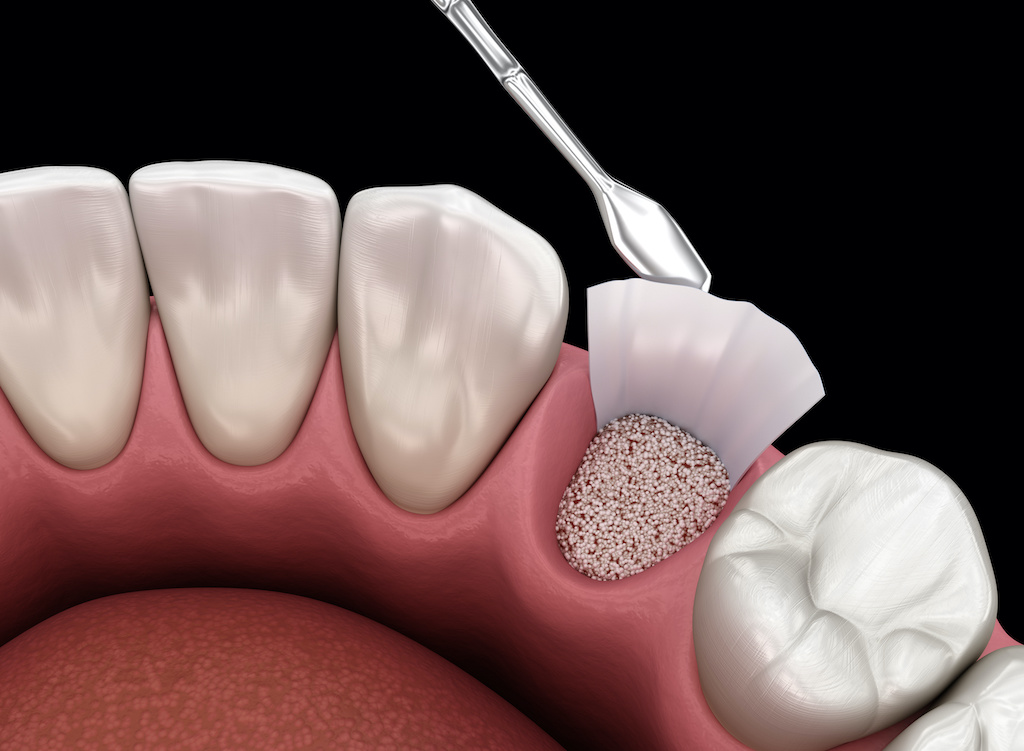
When jawbone has been lost, a dental bone graft is required. This operation is frequently carried out before dental implants are inserted or when neighbouring teeth are suffering from bone loss.
What is a dental bone graft?
The volume and density of your jaw are increased in areas of bone loss through a dental bone graft. The bone graft material can either be obtained from an animal tissue bank or from a human tissue bank (autogenous or allograft). (xenograft). The bone graft material may occasionally be synthetic. (alloplast).
How does a dental bone
graft work?
Once the bone graft is in place, it creates room for your body to perform the necessary repair job. In other words, a dental bone graft acts as a scaffold for the growth and regeneration of your own bone tissue.
Your dentist might occasionally mix a dental bone graft with
platelet-rich plasma. (PRP). This promotes healing and tissue regeneration and
is extracted from a sample of your own blood.
Who needs a dental bone
graft?
A dental bone graft is frequently required by someone who has lost jawbone density. This process might be suggested if you:
- are getting a tooth pulled
- Plan to use a dental implant to repair a missing tooth
- Before having dentures, the jaw must be rebuilt
- have patches of bone loss as a result of gum disease (periodontitis)
How common are dental
bone grafts?
Dental bone grafts are a very common procedure. They can be done by a conventional dentist or a specialist like an oral surgeon or dentist near me a periodontist.
Sinus lift
Located immediately above your top back teeth are the maxillary sinuses. The sinuses may descend and encroach on the region originally occupied by the roots of the lost upper back teeth. Implants would be inappropriate in this situation since they would pierce the sinus membrane.
Your dental surgeon or periodontist is capable of a sinus lift to solve this
issue. The sinus is raised to its correct location using this method. The sinus
is subsequently filled with a dental bone graft, laying the groundwork for
future dental implants.
Periodontal bone graft
The bone that supports the teeth might deteriorate as a result of gum disease infection. The teeth may become loose as a result of this. An existing tooth is given greater support and less movement by a periodontal bone graft.
Bone grafts for dental implants typically need to cure fully
before the real implant is inserted. Recovery periods vary because every person
is different. In exceptional circumstances, your dentist might be able to
insert a dental implant and a bone graft simultaneously. But each instance must
be considered individually.
What happens before
dental bone graft placement?
An oral examination will be done by your dentist to look at
the condition of your teeth, gums, and jaw. The degree of your bone loss will
be determined by dental X-rays or scans. Your dentist will then go over your
treatment options with you and design a tailored treatment strategy to suit
your requirements.
What happens before
dental bone graft placement?
Your dental professional will first use local anaesthetic to
numb the region. They will next make a little incision in your gums. The
jawbone can be seen by pushing back the gum tissue a little. Your dentist will
add bone grafting material to the area after cleaning and sanitising it to fix
the deformity. A membrane is frequently placed over the bone transplant to
provide further protection. The gum tissue is finally realigned, and the
incision is stitched up.
What happens after a
dental bone graft?
You can have discomfort, swelling, and bruising following a dental bone graft. These are common side effects, and they should go away soon. Painkillers can be used to treat symptoms. You might also receive antibiotics from your dentist. These must be consumed exactly as directed.
Over the course of the first several days, you might detect tiny pieces of bone erupting from the wound. These fragments frequently resemble sand or salt granules. Call your dentist to make sure that you are healing as expected, even though this is typically not cause for alarm.


Comments
Post a Comment